

Welcome to our firm Newsletter and Case Update for 2026. This is where we aim to keep you up to date with all that is happening in the law affecting workplaces, and with what we have been doing here at KJK Legal.
In this edition, you can expect to read about:
- Team Member update;
- Honouring 4 Decades of Dedication;
- Doyle’s Guide rankings;
- February Client Seminar;
- International Women’s Day Luncheon;
- SISA PD Session; and
- Some recent cases from the South Australian Employment Tribunal (SAET).
Firm News
Team Member update
We are excited to introduce Alyssa Simpson, our newest full-time Junior Administration Assistant who joined us in January 2026. With a background in the dental industry, Alyssa has now made the “extraction” from dental charts to legal files.
Alyssa’s super friendly demeanour and love for dancing guarantee she will continue to keep our office both organised and plaque-free!
Honouring 4 Decades of Dedication
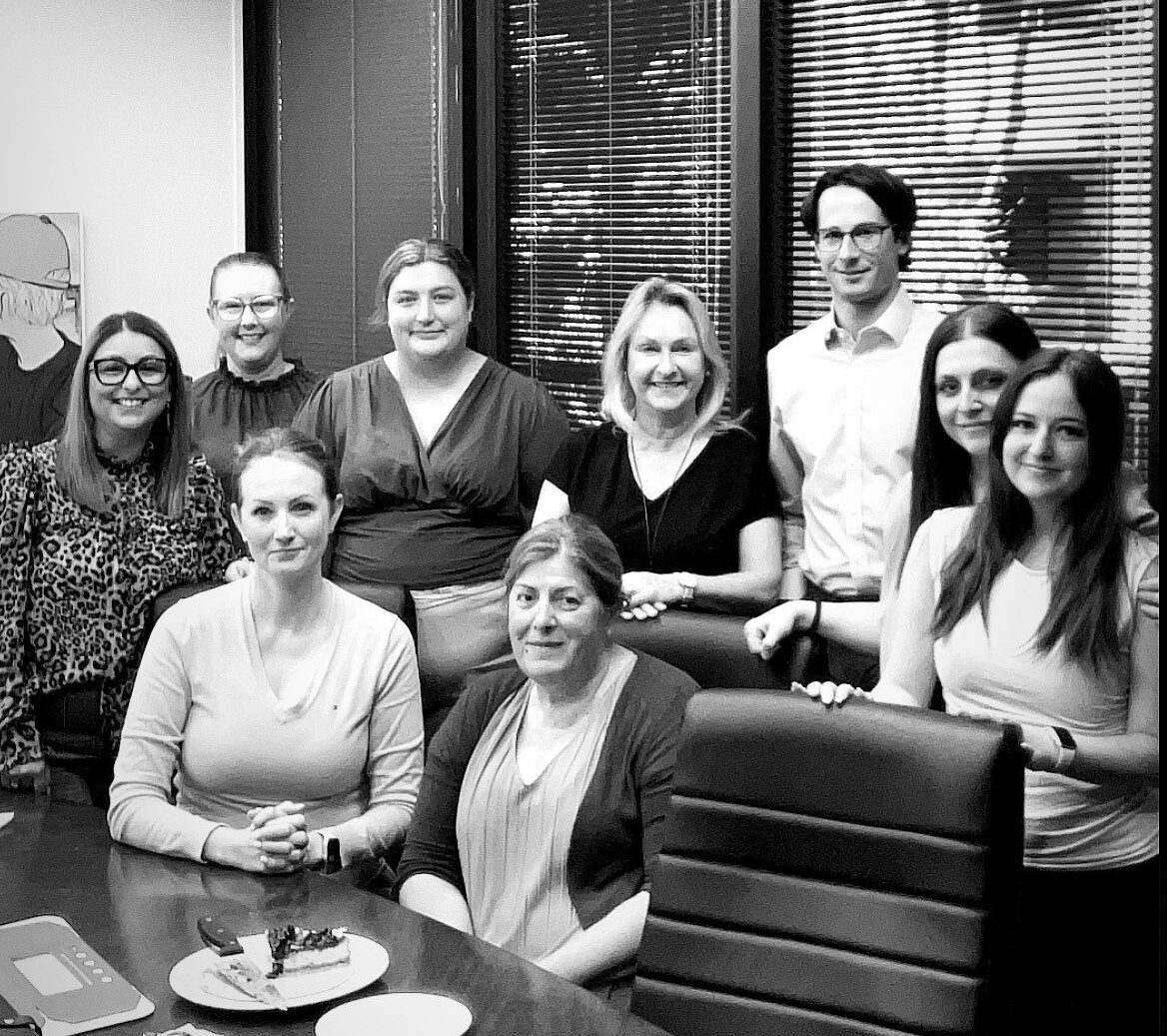
Last month marked a remarkable milestone for our Managing Director, Tracey Kerrigan, who celebrated 40 years since commencing her legal career.
After serving as an Associate to a Judge of the Supreme Court, Tracey began practicing law in 1986, initially with Aldermans (now Piper Alderman) and later went to co-found KJK Legal. We congratulate Tracey on four decades of excellence, leadership and unwavering commitment to the legal profession!
Doyle’s Guide Rankings
We are proud to share that KJK Legal has been recognised in the 2026 Doyle’s Guide as a Leading Workplace Health and Safety Firm (Third Tier), with our director, Tracey Kerrigan being named a Leading Workplace Health and Safety Lawyer (Recommended).
These achievements highlight our ongoing commitment to delivering practical and strategic advice, and the dedication of our team. Thank you to our clients, colleagues, and peers for your continued support.
KJK Legal’s February Client Seminar
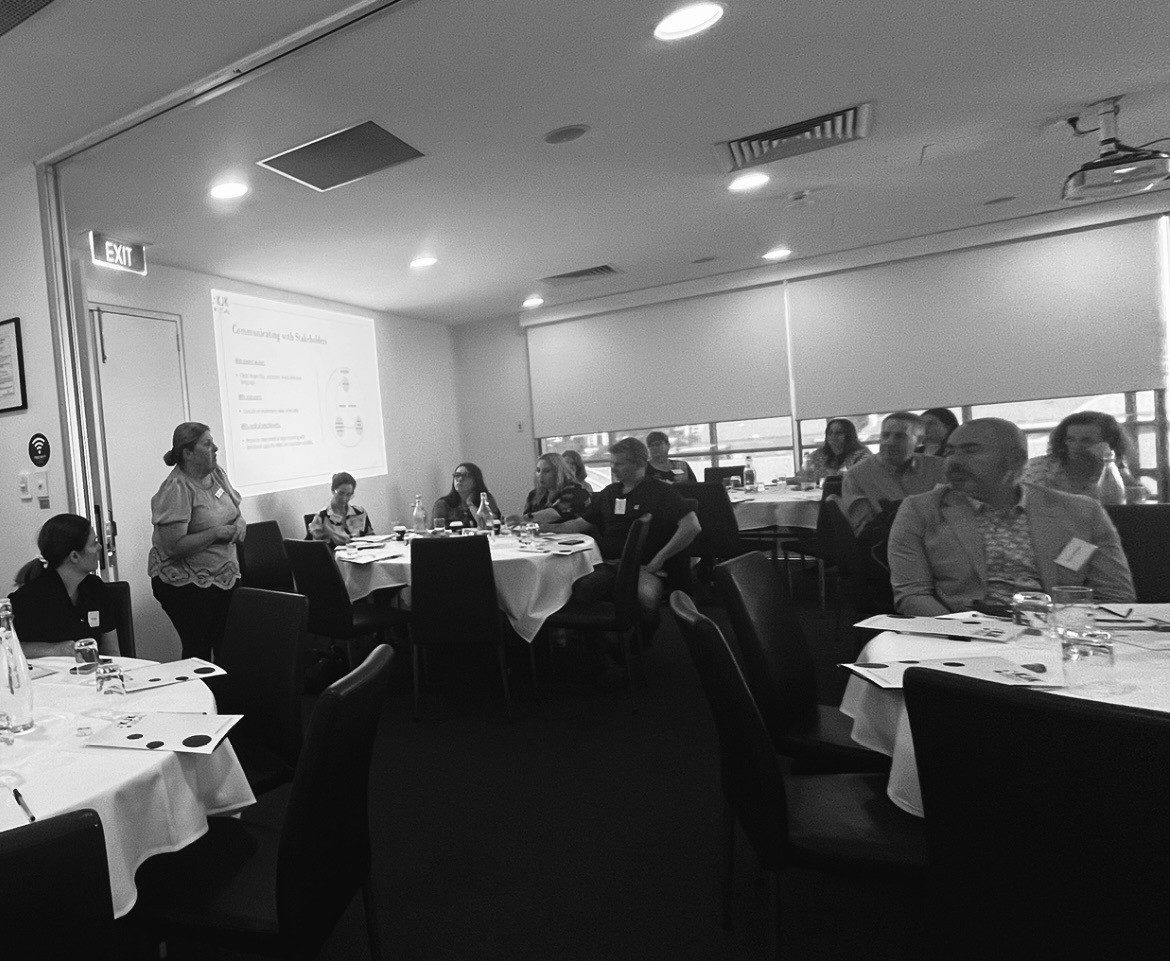
We hosted our first Client Seminar for the year last month which proved to be both informative and engaging, offering our attendees insights into sexual harassment from WH&S, HR and workers compensation perspectives, as well as presenting a strategic guide on the rising impact of mental health claims for self-insured employers.
A special thank you to our guest speaker Andrew Schatz (Barrister from Murray Chambers) who delivered a keynote session on recent developments relating to surveillance and disclosure rules. Andrew navigated the evolution of legislative provisions and caselaw, focusing on recent developments including the recent judicial trends regarding privilege against self-incrimination, adding both context and clarity to a complex subject.
International Women’s Day Luncheon
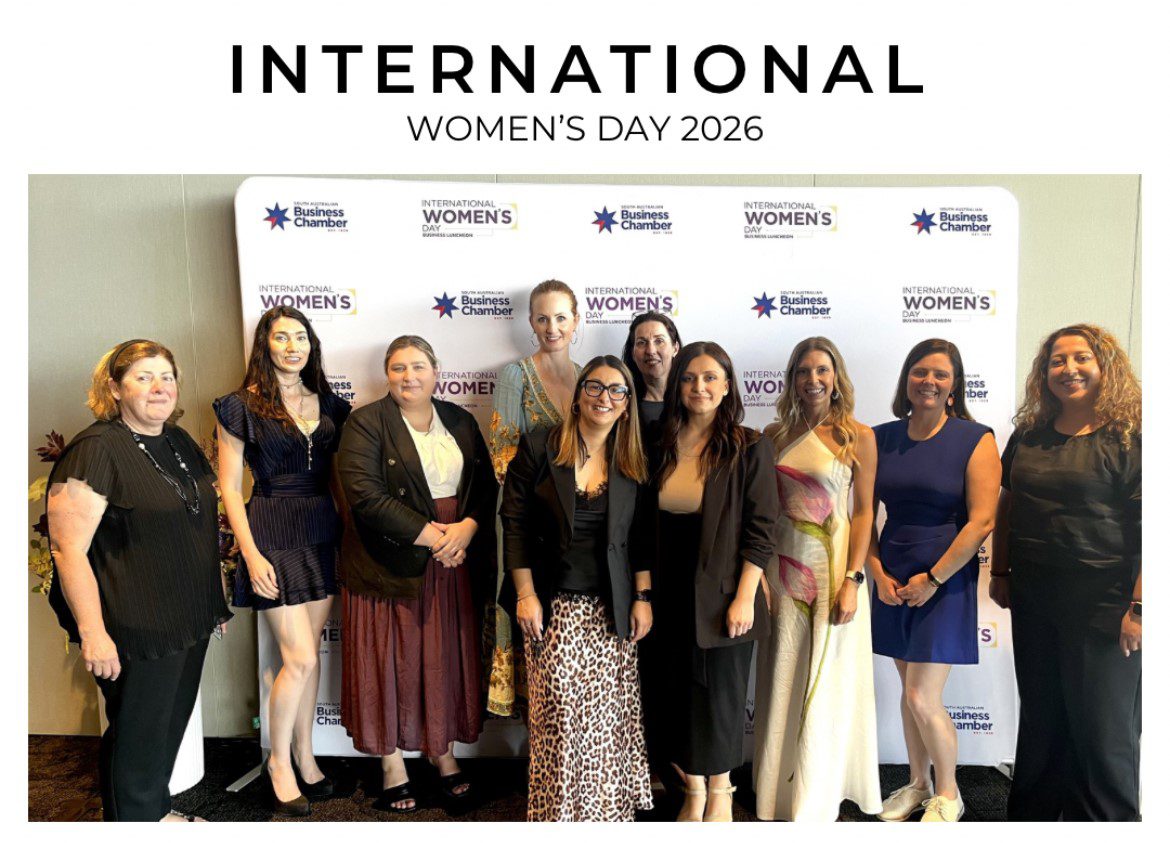
On 6 March 2026, our solicitors joined nearly 600 fellow professionals at the South Australian Business Chamber International Women’s Day lunch on the theme ‘Balancing the Scales’. It was an inspiring day alongside our clients, hearing from remarkable women leading change in traditionally male-dominated industries. We heard powerful stories from the keynote speaker, Dr. Susan Neuhaus, and received practical insights from an outstanding panel on leadership, career pivots, and change management. The day was a strong reminder that meaningful progress comes from ongoing conversation and collaboration.
Sponsorships
SISA – KJK Legal Summer Workplace Seminar
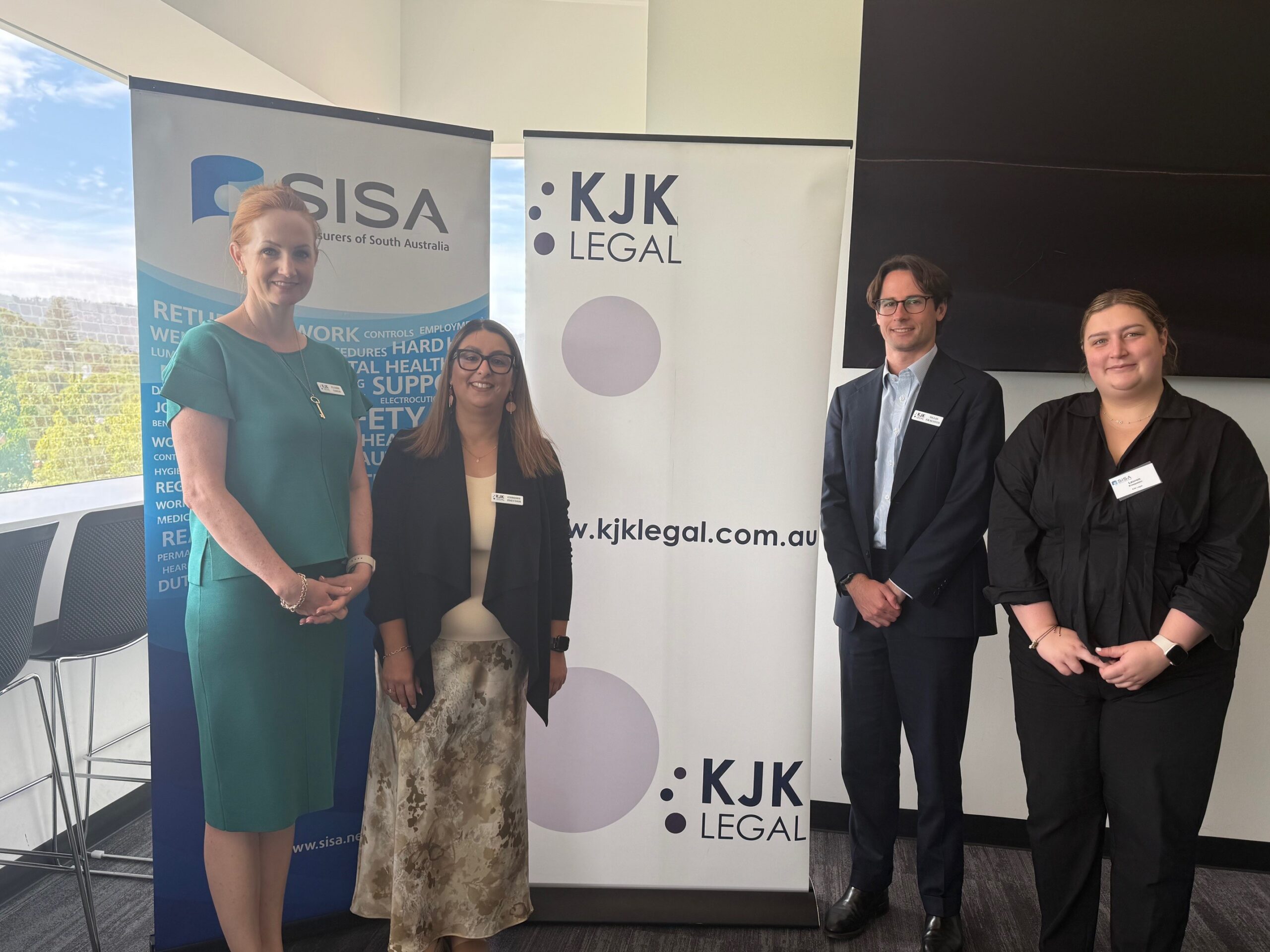
February was a busy month for our team. Our Special Counsels, Chrissy Psevdos and Claire Eagle delivered insightful presentations at Unley Oval for the February 2026 SISA PD session. They explored key topics including claim determination for both physical and psychological injuries, discovery and surveillance challenges, and the impact of evolving psychological issues in the workplace on claim outcomes. The session provided SISA members with valuable strategies and fresh perspectives for navigating complex workers compensation claims.
Recent Decisions of the South Australian Employment Tribunal
Mann v Abbots & Kinney Holdings Pty Ltd & Wilson [2025] SAET 122
Topic: Pecuniary Penalties
Commentator: Claire Eagle
This is a recent case that employers should be aware of in light of the imposition of civil/pecuniary penalties for contraventions of workplace laws by His Honour Deputy President Lieschke.
Facts
The respondent produced bakery goods and operates retail outlets which were managed by the Applicant.
The applicant (Mann, an employee) brought proceedings in the SAET against the respondent for underpayment of employment entitlements, including wages and bonuses. The respondent refused to pay the bonuses as set out in the contract of employment. The employee sought recovery of unpaid wages and pecuniary penalties for the employer’s contraventions of employment obligations under section 323 of the Fair Work Act 2009.
Issue
- Whether the employer contravened statutory employment obligations, and if so, what pecuniary penalty should be imposed?
Decision
The Tribunal found that the employer had contravened employment laws by failing to pay the required entitlements and that it did not rectify the contravention following an order of the court to do so. Notably, the Respondent chose not to be involved in the proceedings.
A pecuniary penalty was imposed on the employer, largely as a deterrent, but also because there was no remorse.
The Respondents were ordered to pay the Applicant $13,314 in bonuses and pecuniary penalties in the sum of $45,000. It is clear that the penalty far exceeds the underpayment to ensure compliance.
Reasoning
The SAET held that:
- The employer failed to comply with statutory obligations to pay wages correctly.
- Such breaches undermine workplace protections and therefore require penalties to deter employers from similar conduct.
- Even where the financial loss to the employee may not be extremely large, deterrence remains important to ensure compliance with employment standards.
Key Takeaway
The case confirms that:
- the SAET will impose civil penalties for wage underpayment breaches; and
- the primary purpose of penalties is deterrence and enforcement of workplace standards, not compensation alone;
- it is advisable to get advice on these issues to reduce exposure to penalties.
A link to the full text of the case can be found here.
Priolo v Return to Work Corporation of South Australia & Anor [2025] SAET 128
Topic: Appeal of Journey Injury Claim
Commentator: Suzana Jovanovic
Background
The earlier decision of Priolo was summarised in an earlier edition of our newsletter.
In summary, the worker (a Pilates instructor), was injured when she was struck by a cyclist during an unpaid break between classes and specifically, whilst walking to retrieve her bag from her car.
The worker asserted that her bag contained class materials/run sheets which outlined routines and exercises tailored for the class she was about to teach.
The Trial Judge held that the worker was engaged in a journey when the cyclist collided with her. However, whilst retrieving the bag was a work related reason, the Trial Judge found that the circumstances did not rise to a sufficient level which would warrant this walk to be considered a journey undertaken in the course of carrying out duties of employment.
At trial, the worker’s case was presented as a journey injury case but on appeal, her counsel argued that in any event, the requirements of section 7(2) of the Return to Work Act had been met.
Issues on Appeal
One of the key issues on appeal was the question of whether the act of retrieving the run sheets constituted carrying out a duty of employment or was it reasonably incidental to performing her job. The focal point of the appeal surrounded the adequacy of the trial judge’s reasons regarding the necessity/relevance of the run sheets.
Held
With reference to the case of RTWSA v Wastell, the Full Bench found that the trial judge failed to adequately explain or make factual findings about the significance/necessity of retrieving the run sheets to conduct the Pilates class.
The case was remitted to the trial judge for further findings pertaining to the need or requirement to retrieve the run sheets from her car to conduct the next Pilates class.
Key Takeaway
Injuries sustained during breaks or while performing tasks outside the immediate workplace may be compensable if it can be clearly established that the activity was a required duty of employment or was reasonably incidental to performing their job.
A link to the full text of the case can be found here.
Steel v Department for Correctional Services [2025] SAET 129
Topic: Sequelae Injuries and Evidence-Based Treatment Entitlements
Commentator: Lauren Knappstein
Background
The worker is a correctional services officer at the Yatala Labour Prison. She suffered a left shoulder injury at work on 14 January 2022 while opening a heavy gate in the prison. As a result of the injury to her left shoulder, she required two surgeries, including a reverse total shoulder replacement. Due to her left arm being immobilised for long periods, she relied heavily on her right arm and subsequently developed a right shoulder condition. The Department for Correctional Services (DCS) accepted this as a sequelae injury.
Conservative treatment and arthroscopic surgery on the right shoulder failed. Her treating surgeon recommended a reverse total right shoulder replacement. DCS refused to pre‑approve the cost, arguing the procedure was not reasonably incurred as a consequence of the work injury.
Issues
- Is there a requirement/necessity for surgery to the right shoulder supported by medical evidence?
- If yes to (1), did the applicant’s right shoulder injury and subsequent requirement for surgery arise from the original left shoulder injury and surgery that was accepted by the respondent?
- If yes to (2), is the cost of a reverse total right shoulder replacement ‘reasonably incurred’ under section 33 of the Return to Work Act?
- If yes to (3), should the surgery be accepted despite the worker’s age and prothesis lifespan?
Held
The Tribunal set aside the decision and ordered that the Department pre-approve the surgery. The Tribunal accepted that overuse of the right arm following the left shoulder injury caused the right shoulder condition and that surgery is deemed reasonable.
Key Takeaway
This decision confirms that compensation extends to sequelae injuries and that treatment disputes are determined through evidence-based assessments. It also makes clear that reasonableness is not defeated by age or risk alone, and employers must base pre-approval decisions on balanced medical evidence rather than relying on a single contrary view.
A link to the full text of the case can be found here.
Grantham v Department for Correctional Services [2025] SAET 131
Topic: WPI Assessment Compliance
Commentator: Claire Eagle
This Full Bench case reiterates that we still have significant disputation around WPI assessments.
Facts
The worker suffered a work injury by way of bilateral carpal tunnel syndrome and later underwent a permanent impairment assessment. The assessment determined the worker’s Whole Person Impairment percentage.
The worker disputed the outcome in the SAET.
The key dispute involved whether the impairment assessment had been conducted correctly under the Impairment Assessment Guidelines and the AMA Guides.
Issue
The question of law considered was whether the permanent impairment assessment complied with the statutory requirements and in particular, whether the assessor was satisfied that “positive clinical findings of median nerve dysfunction” in the absence of nerve conductions studies.
Decision
The Tribunal upheld the validity of the impairment assessment in the first instance and did not allow the worker to obtain a different assessment. The Full Bench concluded that the trial judge had not made adequate findings of fact for the question of law to be answered. The case was remitted to the trial judge, His Honour Deputy President Gilchrist.
Reasoning
The Full Bench did however emphasise several key principles about permanent impairment assessments:
- “AMA5 is not legislation and the approach a court takes when construing legislation does not necessarily apply”.
- Compliance with the Guidelines
- The assessment must follow the Impairment Assessment Guidelines and the AMA Guides.
- If the assessor follows the required process and methodology, the Tribunal will not interfere simply because another doctor might give a different opinion.
- Limited grounds to challenge
- A permanent impairment assessment will only be set aside if there is:
- material error,
- failure to follow the Guidelines, or
- jurisdictional error.
- A permanent impairment assessment will only be set aside if there is:
- Tribunal’s role
- SAET does not re-assess the medical evidence itself.
- Its role is to determine whether the assessment process complied with the legislative scheme.
Watch this space!
A link to the full text of the case can be found here.
Local Government Association (City of Charles Sturt) v Vercoe & Return to Work Corporation of South Australia [2025] SAET 135
Topic: Appeal – Contributing cause of Work from Home injury
Commentator: Suzana Jovanovic
Background
On 19 September 2022, the worker fell and was injured while working from home during an authorised break. She tripped over a metal pet fence which was set up to keep a puppy away from her pet rabbit. There was no employer direction about activities during authorised breaks. Her home was considered the place of employment with the employer’s approval for her to work remotely on the day in question.
Issues
Whether employment was a significant contributing cause of the injury sustained during an authorised break at home, or whether the injury arose from a private domestic hazard unrelated to employment.
Held
The Trial Judge held the that the injury was compensable in that it occurred during an authorised break at her place of employment (i.e. her home) and employment was a significant contributing cause because the metal pet fence was a feature of her place of employment.
On appeal, the Full Bench found that simply being at the place of employment and encountering a home hazard is insufficient. It is not enough to find a causal connection between the injury and employment.
Whilst the pet fence was a feature of the place of employment, it also had a private purpose (i.e. to keep the puppy away from her pet rabbit), and even though the worker was injured during an authorised break, there may have been other reasons for taking the break. A significant contributing cause requires more than temporal connection. The matter was remitted to the Trial Judge for further evaluation.
One judge dissented as he considered the temporary or private nature of the hazard was irrelevant and in his view the injury was compensable and amongst other things gave an example that if a worker trips over a box of files or a co-worker’s shopping on their way to get coffee during an authorised break at work, the resulting injury should be compensable since the hazard is a feature of the workplace, regardless of its temporary or private nature.
Key Takeaway
Employers should provide ergonomic advice and equipment for home workstations, check in regularly with remote workers, and encourage employees to notify them of any additional hazards identified in the home workplace so that appropriate safety controls can be implemented to reduce the risk of injury.
A link to the full text of the case can be found here.
Rose v Coles Group Limited (No2) [2025] SAET 137
Topic: Disclosure of Surveillance
Commentators: Chrissy Psevdos and Lauren Knappstein
Background
The worker sought directions requiring that the employer, Coles Group Limited (Coles), disclose the dates of the investigation report that arose from surveillance that was undertaken during her workers compensation claim.
At a previous time, Coles had inadvertently disclosed the existence of some surveillance reports from earlier proceedings, but privilege was upheld.
In these proceedings, Coles had once again disclosed the existence of surveillance material at a compulsory conciliation conference. The applicant did not seek particulars or production at that time. Coles had maintained that the reports and footage were protected by legal professional privilege and that revealing the dates would unfairly compromise its ability to test the applicant’s reliability at trial.
Issues
- Was the respondent required to disclose the dates of surveillance investigator reports so that the applicant could challenge the claim of legal professional privilege?
- How does section 104(3) of the Return to Work Act 2014 and the SAET Rules operate regarding disclosure of the surveillance material during the conciliation period?
Held
The Tribunal found that the Application for Directions should be dismissed on the following grounds:
- Disclosure obligations at conciliation run only to the commissioner, not the other party. Disclosure is required only to members of the Tribunal presiding over the compulsory conciliation conference.
- Natural justice and procedural fairness supported the dismissal of the application because revealing the dates would alert the applicant to what times there was surveillance evidence and in turn the applicant would be aware of what evidence the respondent may rely upon for the purposes of cross examination.
Key Takeaway
Employers can maintain legal professional privilege over surveillance material when it is obtained for legal advice or litigation. At conciliation, there is only the requirement to disclose the existence of surveillance to the Tribunal member, not to the worker. Employers are not required to reveal dates or details or surveillance where doing so would compromise their ability to test a worker’s credibility at trial.
A link to the full text of the case can be found here.
Xie v Return to Work Corporation of South Australia (No2) [2025] SAET 139
Topic: Refusal to attend IMA examination justifies suspension of compensation entitlements
Commentator: Lauren Knappstein
Background
The worker put in a claim for fluoride toxicity poisoning for weekly payments and medical expenses which was subsequently rejected and referred to the Tribunal. During the proceedings, questions arose about the worker’s mental capacity to conduct litigation. An Independent Medical Advisor was therefore appointed to assess the psychiatric condition, his capacity to conduct proceedings and whether the trial should be modified. The worker attended the assessment but refused to participate unless he was allowed to record the appointment. Both the psychiatrist and the clinic policy did not consent to a recording taking place, and so the assessment did not take place.
Issues
- Did the applicant in these proceedings hinder the assessment under section 122(3) of the Return to Work Act?
- Was there a valid referral to the Tribunal by the IMA? (the clinic referred to the Tribunal rather than the psychiatrist themselves)
- Was the applicant’s conduct unreasonable?
- Should the applicant’s conduct mean his rights to compensation (weekly payments and medical expenses) are suspended under section 122(4) of the Return to Work Act?
- Were the applicant’s challenges to the IMA process valid?
Held
The Tribunal found that the referral to the tribunal was valid as the clinic staff was an agent of the psychiatrist under section 122(3). They also found that the applicant had imposed the condition of recording (which was not authorised by the clinic), and he refused to proceed without it, therefore there was a refusal to comply and a hinderance of the examination. It was found that the IMA was found to be valid and deemed necessary before trial can proceed. A suspension of rights to the applicant’s compensation was made until the worker complies with the IMA.
Key Takeaway
If a worker obstructs a properly arranged medical assessment, employers have a clear pathway to pause liability until the worker cooperates and the Tribunal will back that approach.
A link to the full text of the case can be found here.
McCarthy v Return to Work Corporation of South Australia [2025] SAET 140
Topic: Noise induced hearing loss
Commentator: Tracey Kerrigan
Background
The worker submitted a claim for noise induced hearing loss (NIHL) in respect to employment with Holdens between 1990 and April 2007. After that date, the worker undertook employment with a state government entity and then a federal government entity, in what was described as trade measurement services. His work involved 20% office work and the remainder being visits to site which could be “noisy” but which the worker said did not expose him to any significant noise and where he wore hearing protection.
He first noticed hearing loss around March 2018, well after he had finished up with Holdens. He also commenced to suffer tinnitus 6 to 8 years ago, again after he had finished with Holdens.
Although the worker had asserted in his affidavit that he needed new hearing aids because the ones he was using were inadequate, in evidence at trial he admitted that those assertions were incorrect.
Audiograms during the Holden employment did not indicate any NIHL. Dr Diamantis concluded that there was no evidence of NIHL as a result of that employment. Dr Hunter was of a different opinion.
Issues
- Who bore the onus of proof in a situation where the worker had ceased working for the employer against whom the claim was being made some 17 years ago?
- If the onus rested on Holdens, did the evidence rebut the presumption in section 9(2)?
- Was the subsequent employment sufficiently noisy to invoke the presumption in section 9(2) of the Act?
Held
Judge Crawley was of the view that Holdens still bore the onus of proof in this situation despite the lengthy time period since the worker was employed at Holdens.
The medical evidence which demonstrated no deterioration in the worker’s hearing between the 1990s and 2020s was sufficient to rebut the presumption and the judge found that the employment at Holdens did not contribute to the worker’s hearing loss.
It was incumbent on the worker having selected an employer at an earlier point in time than the actual last employer to pursue to establish that the later employment was not capable of causing NIHL. The applicant failed to discharge that onus and his own affidavit evidence described significant noise levels, albeit they varied at times.
Key Takeaway
Regular audiograms over the period of a worker’s employment can be evidence that there has been no real exposure, but this will be an issue of fact and degree in any particular case.
If a worker chooses to pursue an employer that is technically not the last employer, then they may bear an onus to demonstrate that the employment in which they are currently employed or which post-dates the employment of the employer that they have chosen to sue, is not exposing them to noise capable of causing NIHL.
There is a difference between work that a worker says is not “noisy”, not “as noisy” as the noisiest employment that they have undertaken, and noise which is capable of causing noise induced hearing loss.
A link to the full text of the case can be found here.
Kellow v Return to Work Corporation of South Australia [2026] SAET 1
Topic: Noise Induced Hearing Loss / Permanent Impairment Assessment assessment
Commentator: Tracey Kerrigan
Background
The worker submitted a claim for noise induced hearing loss which was accepted as a compensable injury. He had been exposed to noise on an intermittent basis for approximately 31 years, but his exposure to noise had ceased in 2004. He continued in employment with a different employer and was no longer being exposed to noise.
Dr Hunter was the nominated PIA assessor and assessed the WPI percentage at 12% (equivalent of 25.1% BHI inclusive of an allowance of 2% for tinnitus). Dr Hunter included the losses at 1500 to 4000 Hertz based on what he considered to be a lengthy period of noise exposure and relied upon a 2024 audiogram. He chose not to rely upon a 2011 audiogram which was undertaken much closer to the date the worker was last exposed to noise but which Dr Hunter did not consider because the loss at 1500 Hertz was unclear.
Evidence indicated that there had been a significant deterioration in the worker’s hearing loss between 2011 and 2024, which could not be explained simply by the aging process.
Dr Diamantis provided comment and did not consider the 2011 audiogram to be unreliable. He also had given no allocation for tinnitus.
Issues
- Should the loss at 1500 Hertz be included in the PIA assessment?
- Was the allowance of 2% for tinnitus appropriate?
- Was the 2011 audiogram sufficiently reliable such that Dr Hunter should have referred to it and excluded the deterioration in the worker’s loss that occurred thereafter?
- Did the evidence indicate that Dr Hunter’s assessment was not to be relied upon in order to justify a referral to an IMA?
Held
Judge Rossi found that there was sufficient evidence of noise exposure over a lengthy period to justify the inclusion of the loss at 1500 Hertz.
He also considered Dr Hunter’s explanation as to why he allocated 2% for tinnitus was not unreasonable.
However, he was not persuaded by Dr Hunter’s views about the 2011 audiogram and nor was he of the view that Dr Hunter had properly accounted for the apparent deterioration in the worker’s hearing loss which may have been for reasons not connected to his employment/exposure to noise. The Judge was concerned that Dr Hunter may have taken the view that the worker was still being exposed to noise after 2011.
For the above reasons, the Judge ultimately found the assessment did not comply with the Impairment Assessment Guides and accordingly determined to refer the matter to an Independent Medical Adviser.
The Judge was also critical that the legal principles in section 188(2) of the Return to Work Act 2014 (which deems the whole of the loss to occur immediately prior to the giving of notice) were not stated in the report requests to either doctor, and neither doctor addressed them. This potentially is relevant to the issue of what audiogram should have been relied upon.
Key Takeaway
NIHL claims remain difficult and the PIA assessment can be complex particularly where there may be multiple audiograms and there can be a lapse in time since the worker was last exposed to noise capable of causing NIHL and when an assessment is undertaken.
Instructing the PIA assessor about the legal test in section 188(2) and (3) may be required.
Determining the relevant audiogram to rely upon can be an issue of fact and it is not an absolute “given” that it will be the audiogram taken on the day of the assessment, even where the worker remains in employment. In this case, it seems that there was a failure to disregard or explain the deterioration in the worker’s hearing over time without any apparent ongoing exposure to noise.
A link to the full text of the case can be found here.
Lum v Return to Work Corporation of South Australia & Anor [2026] SAET 3
Topic: Tribunal rejects Permanent Impairment Assessment after inconsistencies between Examination and Surveillance
Commentators: Chrissy Psevdos and Lauren Knappstein
Background
The worker submitted a claim for lump sum compensation under the Return to Work Act 2014 for permanent impairment arising from Complex Regional Pain Syndrome (CRPS) in her right upper limb. There was conflicting medical evidence, with doctors presenting different views as to whether the worker did, or did not have CRPS, and whether MMI (now stabilisation) had been reached. In 2023, the worker underwent a Permanent Impairment Assessment (PIA) by Dr Suyapto, who concluded the worker had suffered a Whole Person Impairment (WPI) of 52%, deeming the worker seriously injured. Return to Work SA rejected the PIA on the basis that it was non-compliant with the Impairment Assessment Guidelines (IAGs), resulting in an Application for Review.
Issues
- Was the PIA conducted by Dr Suyapto compliant with section 22 of the Return to Work Act and paragraph 2.22 of the IAGs?
- If yes to (1), were the diagnostic criteria for CRPS properly met in the compliance?
- Has there been significant disparity between the applicant’s clinical presentation and the presentation on surveillance footage?
- If yes to (3), has the surveillance footage undermined the reliability of the PIA?
Held
The Tribunal found that the PIA could not be relied upon on the following basis:
- Surveillance footage from 2020 and 2024 showed the applicant using her right arm with far greater range of motion and functionality than she demonstrated to her medical assessors; and
- The assessor, Dr Suyapto, had not properly reviewed or recalled the surveillance footage despite stating in his report that he had, which ultimately raised concerns about the reliability of his assessment.
The Tribunal accepted that the CRPS diagnostic criteria in para 2.22 were satisfied (on a technical basis), but found the PIA was unsafe to rely upon.
Key Takeaway
Surveillance can be powerful when there are concerns that there are inconsistencies with what a worker has reported and is actually experiencing in terms of their symptoms. The Tribunal was prepared to reject a permanent impairment assessment where the worker’s presentation to doctors was inconsistent with surveillance footage. Employers should ensure that assessors are given (and actually review) all relevant evidence, as inconsistencies can significantly affect the outcome of permanent impairment claims.
A link to the full text of the case can be found here.
As always, should you have any queries, feedback or comments on anything we have discussed above, or advice on any workplace legal needs, then please do not hesitate to reach out to one of us.
If you wish to undertake further reading in relation to any of the decisions discussed above, they can be found at AustLII.